Whitsundays
11 boat ramps, 5 dive sites, 1 hidden gem and 1 historic site across 6 destinations.
Destinations

Airlie Beach
6 boat ramps and 9 photographs

Proserpine
4 boat ramps

Hayman Island
2 dive sites and 1 hidden gem

Hook Island
3 dive sites
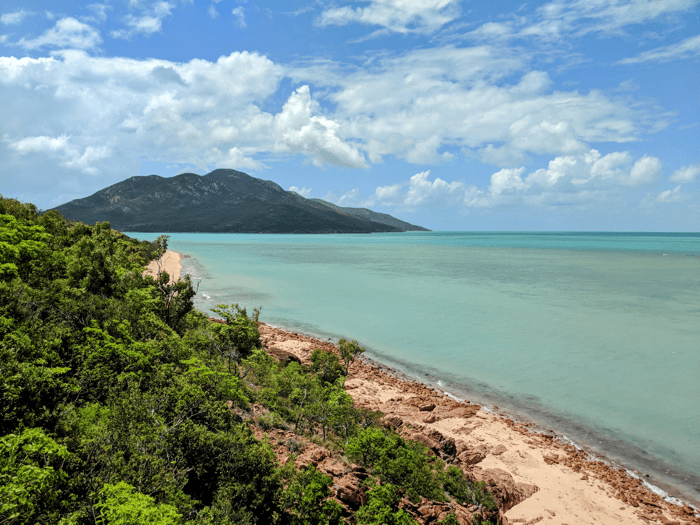
Cape Gloucester
1 boat ramp and 2 photographs
Brampton Island
1 historic site
Everything in Whitsundays
Boat ramps
11Airlie Beach
Airlie Beach, Abell Point Marina
The sheltered launch for Airlie Beach – two lanes and a pontoon tucked in behind the Coral Sea Marina breakwater, with the Whitsunday Islands an easy run offshore. Public ramp, but the car park fills early on any fine weekend.
Airlie Beach
Airlie Beach, Port of Airlie
The town ramp at the eastern end of Airlie Beach – two lanes and a pontoon inside the Port of Airlie marina basin, with the biggest trailer car park of the three Airlie ramps.
Airlie Beach
Cannonvale, Altmann Avenue "VMR Ramp"
The "VMR ramp" at Whisper Bay – two lanes, a floating walkway and a rock breakwater beside the Marine Rescue base, with 46 trailer bays and toilets. Tide-limited on the bottom of the big lows.
Cape Gloucester
Dingo Beach
The beach ramp on Edgecumbe Bay, gateway to the quiet northern waters off Cape Gloucester – rebuilt in 2019, but with its toe a metre above low water it is a mid-to-high tide launch.
Proserpine
Laguna quays
A private resort ramp on Repulse Bay whose public access has been uncertain since Cyclone Debbie – check before you tow, and consider the newer state-built ramp at Midge Point instead.
Airlie Beach
Mandalay, Mandalay Road
A basic council ramp at the end of Mandalay Road, out past Mandalay Point on the northern side of Airlie – small-boat and tinnie territory, with no facilities.
Proserpine
Midge Point
Repulse Bay's public ramp – a two-lane state-built ramp and 120 m causeway at Jimmy's Rocks Road, finished in 2021 after years of locals launching off an informal beach ramp. Still watch the tide.
Proserpine
Proserpine River, Conway Road
The main launch for the Proserpine River – a long two-lane ramp with a floating walkway and 75 bays, five kilometres up from Conway Beach. Barramundi water, and crocodile water.
Airlie Beach
Shingley Beach, Abell Point Marina
The small single-lane ramp on Shingley Beach beside the Coral Sea Marina breakwater – fine for a tinnie or a paddle craft, with no trailer parking; the two-lane Abell Point ramp is a few hundred metres away.
Airlie Beach
Shute Harbour, Shute Harbour Road
The closest launch to the Whitsunday Islands, rebuilt after Cyclone Debbie – two lanes and a fixed sloping walkway, but only 15 trailer bays and a walkway that goes under on big tides. A floating pontoon replacement is on the way.
Proserpine
Wilson Beach, Wilson Beach Road
A rough single-lane ramp on the north bank of the Proserpine River near its mouth – small craft only, limited parking, cross-currents, and crocodiles.
Diving
5Hayman Island
Sculpture - Anthozoa (Whitsundays)
Anthozoa is a reimagining of the tiny coral polyp - life source of the reef. The sculpture is a symbol of resilience, regeneration and hope at a time when the future of the reef is greatly threatened by climate change. Ngaro artist Nicky Bidju Pryor's artwork is featured in the mouth, where the ripples tell a story of change ahead and cultures working together to save the reef. The name Anthozoa comes from the Greek words ánthos 'flower' and zóa 'animals' or 'Flower Animals' as corals were earliest known. By Jessa LLOYD in collaboration with Nicky Bidju Pryor. More information [Whitsunday Reef Recovery Project](/map_data/artefacts/diving-whitsunday-reef-recovery-art-project.pdf).
Hook Island
Sculpture - Manta Ray (Whitsundays)
The indigenous name for Manta Ray is Manguna. Common name "Manta" is Portuguese and Spanish for mantle (cloak or blanket). Adriaan collaborated with traditional owner Arthur Gabey to fashion a surface design with a traditional Ngaro theme of a dreamtime story. The design includes 74 different sized circles which represent the 74 islands in the Whitsundays. There is a serpent on the Manta Ray's wings and its "U" shapes are the Aboriginal symbol for people. Mantas are listed as vulnerable by the International Union for Conservation of Nature. Areas where Mantas congregate are popular with SCUBA diving and snorkelling tourists. By Adriaan Vanderlugt in collaboration with Arthur Gabey. More information [Whitsunday Reef Recovery Project](/map_data/artefacts/diving-whitsunday-reef-recovery-art-project.pdf).

Hayman Island
Sculpture - Maori Wrasse (Whitsundays)
Maori Wrasse or Humphead Maori Wrasse, Cheilinus undulatus is the largest member of the family Labridae, reaching up to 2 metres (six feet long) in the male species, and up to three feet in females. Although widespread on coral reefs in the Indo-west-central Pacific, Humphead Maori Wrasse are uncommon throughout their range. The species is very susceptible to fishing pressure, and as a result is considered Endangered by the International Union for Conservation of Nature. This species is fully protected in the Great Barrier Reef Marine Park. It is very friendly to snorkellors and SCUBA divers at popular tourism sites and fish feeding locations in the Whitsundays. By Adriaan Vanderlugt. More information [Whitsunday Reef Recovery Project](/map_data/artefacts/diving-whitsunday-reef-recovery-art-project.pdf).

Hook Island
Sculpture - Migration of the Mantas (Whitsundays)
Mantas are found in warm temperate, subtropical and tropical waters. They are pelagic (surface dwelling) species. Mantas have triangular pectoral fins, horn-shaped cephalic fins and a large, forward-facing mouth. Mantas may visit cleaning stations for the removal of parasites. Like whales, they breach for unknown reasons. Brian collaborated with traditional owner Nicky Bidu Prior to emboss a traditional pattern. If you're lucky enough to spot a Manta on the Reef and snap a photo of its underbelly, email your picture to Eye on the Reef and \or Project Manta to contribute to their ongoing research and monitoring program. By Brian Robinson in collaboration with Nicky Bidju Pryor. More information [Whitsunday Reef Recovery Project](/map_data/artefacts/diving-whitsunday-reef-recovery-art-project.pdf).

Hook Island
Sculpture - Turtle Dream (Whitsundays)
Turtle Dream is a Hawksbill turtle, Eretmochelys imbricata, a critically endangered species. Hawksbill turtles are easily distinguished from other sea turtles by their sharp curving beak, and the saw-like appearance of its shell margins. The Ngaro indigenous name for Hawksbill turtle is Maeyila. The sculpture is created from 800 individual pieces that were hand shaped, welded and polished by the artist and his son Colin. The Artist feels this work is a pinnacle of his long public art career, symbolising the passion that many people have for the reef, marine species, oceans and planet. By Col Henry. More information [Whitsunday Reef Recovery Project](/map_data/artefacts/diving-whitsunday-reef-recovery-art-project.pdf).